
Effective Foot Exercises to Strengthen the Feet

Strong feet are essential for stability, balance, and overall foot health. Incorporating targeted foot exercises into your routine can help strengthen the muscles, ligaments, and tendons in your feet while reducing the risk of injuries and improving performance in various activities. Toe scrunches are a simple yet effective exercise that involves scrunching your toes toward the sole of your foot and then spreading them out as wide as possible. Another beneficial exercise is toe raises, where you lift your toes off the ground while keeping your heels planted and then lower them back down. Additionally, practicing calf raises can strengthen the muscles in your lower legs and feet, enhancing stability and power. You can also use resistance bands to perform exercises, such as toe flexion and extension, which target specific muscles in the feet and ankles. It is important to be informed about overall foot health, and if you are seeking additional foot stretches to perform, it is suggested that you confer with a podiatrist. 

Exercising your feet regularly with the proper foot wear is a great way to prevent injuries and build strength. If you have any concerns about your feet, contact one of our podiatrists from Houston Foot and Ankle. Our doctors can provide the care you need to keep you pain-free and on your feet.

Exercise for Your Feet

Exercise for your feet can help you gain strength, mobility and flexibility in your feet. They say that strengthening your feet can be just as rewarding as strengthening another part of the body. Your feet are very important, and we often forget about them in our daily tasks. But it is because of our feet that are we able to get going and do what we need to. For those of us fortunate enough to not have any foot problems, it is an important gesture to take care of them to ensure good health in the long run.

Some foot health exercises can include ankle pumps, tip-toeing, toe rises, lifting off the floor doing reps and sets, and flexing the toes. It is best to speak with Our doctors to determine an appropriate regimen for your needs. Everyone’s needs and bodies are different, and the activities required to maintain strength in the feet vary from individual to individual. 

Once you get into a routine of doing regular exercise, you may notice a difference in your feet and how strong they may become.

If you have any questions, please feel free to contact our offices located in Kingwood, Humble, The Woodlands, and Conroe, TX . We offer the newest diagnostic and treatment technologies for all your foot care needs.


Read more about Exercise for Your Feet

Walking on a Foot Stress Fracture

Walking on a foot stress fracture can seem like a feasible option in certain situations, but it carries both advantages and disadvantages. On the positive side, continuing to walk may help maintain mobility and prevent muscle atrophy, especially if the fracture is minor and does not cause severe pain. It can also be convenient for individuals with busy schedules or obligations that require them to stay on their feet. However, walking on a stress fracture can exacerbate the injury, delaying healing and potentially causing further damage. It may prolong recovery time and increase the risk of complications such as a complete fracture or chronic pain. Additionally, ignoring the need for rest and proper treatment can lead to long-term consequences, including decreased bone density and recurrent injuries. Ultimately, while walking on a foot stress fracture may offer short-term benefits, it is essential to prioritize rest and medical guidance to ensure a full and efficient recovery. If you have endured a foot stress fracture, it is suggested that you consult a podiatrist who can provide proper recovery treatment.

Stress fractures occur when there is a tiny crack within a bone. To learn more, contact one of our podiatrists from Houston Foot and Ankle. Our doctors can provide the care you need to keep you pain free and on your feet.

How Are They Caused?

Stress fractures are the result of repetitive force being placed on the bone. Since the lower leg and feet often carry most of the body’s weight, stress fractures are likely to occur in these areas. If you rush into a new exercise, you are more likely to develop a stress fracture since you are starting too much, too soon.  Pain resulting from stress fractures may go unnoticed at first, however it may start to worsen over time.

Risk Factors

  • Gender – They are more commonly found in women compared to men.
  • Foot Problems – People with unusual arches in their feet are more likely to develop stress fractures.
  • Certain Sports – Dancers, gymnasts, tennis players, runners, and basketball players are more likely to develop stress fractures.
  • Lack of Nutrients – A lack of vitamin D and calcium may weaken the bones and make you more prone to stress fractures
  • Weak Bones – Osteoporosis can weaken the bones therefore resulting in stress fractures

Stress fractures do not always heal properly, so it is important that you seek help from a podiatrist if you suspect you may have one. Ignoring your stress fracture may cause it to worsen, and you may develop chronic pain as well as additional fractures.

If you have any questions please contact our offices located in Kingwood, Humble, The Woodlands, and Conroe, TX . We offer the newest diagnostic and treatment technologies for all your foot and ankle needs.

Read more about Dealing with Stress Fractures of the Foot and Ankle

Ankle Fracture Care

A broken ankle occurs when the bones forming the ankle joint suffer fractures. This injury often arises from sudden impacts, twists, or repetitive stress on the ankle. Symptoms typically entail intense pain, swelling, bruising, difficulty walking, and potential deformity surrounding the ankle area. Managing a broken ankle depends on factors like the extent and location of the fracture. Treatment options may include immobilization using a cast or splint, rest, elevation, and occasionally surgical intervention to realign and stabilize the bones. If you have broken your ankle, it is suggested that you schedule an appointment with a podiatrist who can offer specialized expertise in diagnosing and treating foot and ankle conditions, including fractures.

Broken ankles need immediate treatment. If you are seeking treatment, contact one of our podiatrists from Houston Foot and Ankle. Our doctors can provide the care you need to keep you pain-free and on your feet. 

Broken Ankles
A broken ankle is experienced when a person fractures their tibia or fibula in the lower leg and ankle area. Both of these bones are attached at the bottom of the leg and combine to form what we know to be our ankle.

When a physician is referring to a break of the ankle, he or she is usually referring to a break in the area where the tibia and fibula are joined to create our ankle joint. Ankles are more prone to fractures because the ankle is an area that suffers a lot of pressure and stress. There are some obvious signs when a person experiences a fractured ankle, and the following symptoms may be present.

Symptoms of a Fractured Ankle

  • Excessive pain when the area is touched or when any pressure is placed on the ankle
  • Swelling around the area
  • Bruising of the area
  • Area appears to be deformed

If you suspect an ankle fracture, it is recommended to seek treatment as soon as possible. The sooner you have your podiatrist diagnose the fracture, the quicker you’ll be on the way towards recovery.

If you have any questions, please feel free to contact our offices located in Kingwood, Humble, The Woodlands, and Conroe, TX . We offer the newest diagnostic and treatment technologies for all your foot care needs.
Read more about All About Broken Ankles

Causes of a Bunion and How to Manage It

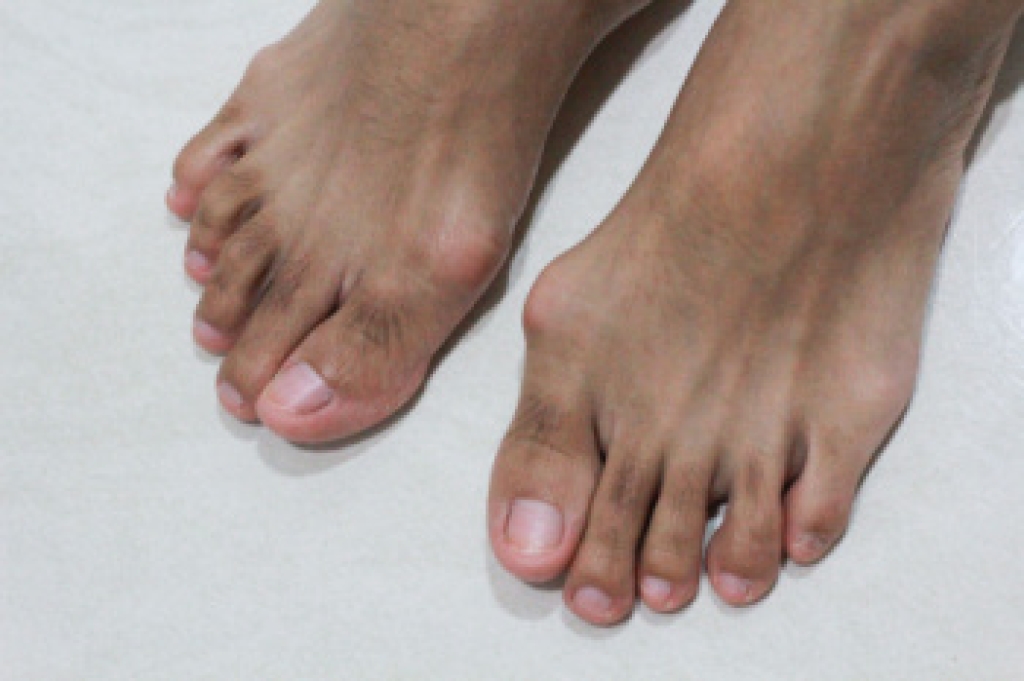
If you have a bump forming at the base of your big toe or experience discomfort while wearing certain shoes, you might be dealing with a bunion. This foot deformity, medically known as hallux valgus, develops gradually due to various factors. Included are genetics, wearing tight or high-heeled footwear, rheumatoid arthritis, or Marfan's syndrome, which causes a loosening of joints. Symptoms of a bunion are a noticeable bump, pain, and redness of the big toe. Corns or calluses, limited toe movement, and a burning sensation or numbness may also occur. While initial treatment involves wearing proper footwear, more severe cases may require custom orthotics, toe spreaders, or surgery. A podiatrist can offer guidance on ways to manage symptoms, prevent further complications, and determine if surgery is needed to realign the toe and alleviate pressure on the joint. If you have a bunion that is causing pain or impeding daily activities, it is suggested that you schedule an appointment with a podiatrist for an exam and treatment options.

If you are suffering from bunion pain, contact one of our podiatrists of Houston Foot and Ankle. Our doctors can provide the care you need to keep you pain-free and on your feet.

What Is a Bunion?

Bunions are painful bony bumps that usually develop on the inside of the foot at the joint of the big toe. As the deformity increases over time, it may become painful to walk and wear shoes. Women are more likely to exacerbate existing bunions since they often wear tight, narrow shoes that shift their toes together. Bunion pain can be relieved by wearing wider shoes with enough room for the toes.

Causes

  • Genetics – some people inherit feet that are more prone to bunion development
  • Inflammatory Conditions - rheumatoid arthritis and polio may cause bunion development

Symptoms

  • Redness and inflammation
  • Pain and tenderness
  • Callus or corns on the bump
  • Restricted motion in the big toe

In order to diagnose your bunion, your podiatrist may ask about your medical history, symptoms, and general health. Your doctor might also order an x-ray to take a closer look at your feet. Nonsurgical treatment options include orthotics, padding, icing, changes in footwear, and medication. If nonsurgical treatments don’t alleviate your bunion pain, surgery may be necessary.

If you have any questions, please feel free to contact our offices located in Kingwood, Humble, The Woodlands, and Conroe, TX . We offer the newest diagnostic and treatment technologies for all your foot care needs.

Read more about What Are Bunions?

Do You Suffer From Painful Feet?

Painful deformities, such as hammertoes, can be treated. Stop living with foot pain, and have beautiful feet again!

Connect With Us

Advanced Podiatric Procedures & Services in the Harris County, TX: Houston, Kingwood, Humble, Spring;  Atascosa County, TX: Atascocita; Montgomery County, TX: The Woodlands, Conroe, New Caney areas